
These are 7 Warnings About FXONET — Why This Unregistered Broker Could Cost You Everything
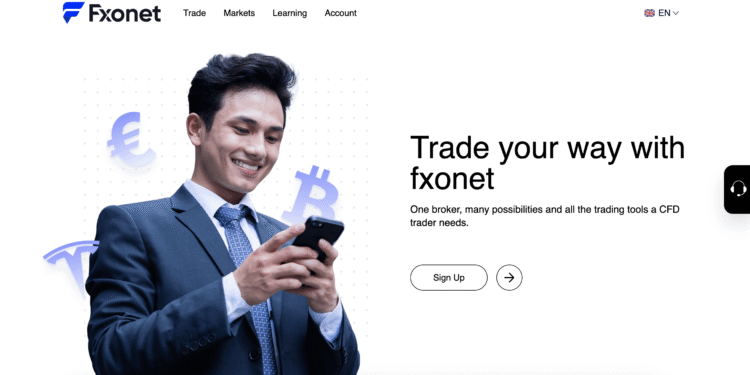
FXONET markets itself as a global online trading provider offering forex, CFDs and cryptocurrencies with a slick user interface and promises of fast execution and generous returns. On the surface the platform looks professional: polished marketing, trading dashboards, and a long list of asset classes. But beneath that veneer lie multiple, serious red flags that match the playbook of unregistered broker networks and organized crypto scam operations. The UK Financial Conduct Authority has publicly warned that FXONET is not authorised to provide financial services in the UK, which means UK customers dealing with the platform have no regulator to turn to for complaints or compensation.
TO RECOVER YOUR LOCKED CRYPTO, CLICK HERE
The company public materials claim registration in Mwali (Moheli) island, Comoros, and assert a local licence under a Mwali regulator. Those jurisdictional statements should be treated with extreme caution: low-tier or offshore registrations are commonly used by fraudulent broker networks to create the appearance of legitimacy while avoiding meaningful oversight. FXONET’s own pages repeat the Mwali registration claims, but independent broker monitors and reviewers warn that such licensing offers far weaker investor protection than a top-tier regulator and is frequently misused by bad actors.
Independent watchdogs and broker review platforms have flagged FXONET repeatedly, publishing detailed concerns about opaque ownership, template-style scam web pages, and reports of real victims. Investigations and exposés have surfaced stories of individuals who were persuaded to deposit significant sums and later encountered blocked withdrawals, evasive support, or fabricated compliance reasons for withholding funds. These complaint patterns are classic signatures of crypto trading fraud and unregistered broker schemes, where operators accept deposits but create endless barriers when investors try to withdraw.
Public review sites and user feedback add to the alarm. Multiple verified reviews describe experience consistent with scam operations: smooth deposit flows, impressive-looking account dashboards showing rising balances, followed by sudden withdrawal denials or requests for additional “verification” or “tax” payments before any money can be released. Trust and reputation platforms show a mix of glowing marketing-style posts and a large number of negative testimonials claiming money was trapped. Real user complaint volumes and consistent themes across independent forums are a red flag that should not be ignored.
Technical and structural indicators point to further risk. Domain and hosting checks show new or recently changed registrations, privacy-protected WHOIS records, and use of generic templates — all attributes common among sites that rotate domains to escape scrutiny. Sites that rely heavily on testimonials, influencers, or sudden aggressive affiliate marketing while hiding corporate officers are frequently part of networks that create multiple clone domains. Once a domain is flagged, the operators migrate to the next name and keep the money flowing. This tactic dramatically reduces the odds of successful crypto recovery because funds are moved quickly across wallets and jurisdictions.
For anyone who has already sent funds to FXONET, the path to recovery is difficult but not impossible. Crypto recovery in these contexts requires rapid action: preserve all communications and receipts, export transaction hashes and wallet addresses, and immediately contact your payment provider to explore chargeback options for card or bank transfers. If cryptocurrency was used, forensic blockchain tracing is necessary to map the flow of funds and identify on-ramps to centralized exchanges that might freeze assets. Professional crypto recovery services and law enforcement cooperation increase the chance of reclaiming anything, but success rates are far from guaranteed and often depend on speed, evidence quality, and whether the stolen funds touched a custody service that will cooperate.
The combination of an offshore registration claim, multiple independent warnings, negative user reports, and domain opacity positions FXONET as high risk for ordinary traders. The worst outcomes follow a familiar script: initial small withdrawals permitted to build confidence, escalating deposit pressure through “VIP” upsells, and then insurmountable withdrawal obstacles when investors attempt to retrieve meaningful sums. Because FXONET’s structure appears designed to limit accountability, prevention is far better than attempting recovery after the fact.
To protect yourself immediately, do not deposit more money, document every interaction, test any remaining withdrawal with the smallest feasible amount, and report the company to your national financial regulator and local cybercrime authorities. If you already lost significant funds, assemble all transaction data and consider engaging a reputable crypto recovery service that can provide a realistic assessment of recovery likelihood and costs. Remember: when a broker cannot prove credible regulation with top-tier licences, you are effectively lending money to an anonymous operator — act accordingly.
Conclusion
FXONET presents many of the classic cues that separate legitimate regulated brokers from high-risk, often fraudulent operations. The most decisive single signal is a credible regulator’s public warning that the firm is not authorised to offer investment services in a major market, because that warning removes the primary safety net investors rely on: enforceable oversight and dispute resolution. Without regulator protection, users who lose funds cannot expect standard remedies like ombudsman decisions or compensation schemes. That institutional absence is the key reason why unverified platforms should be avoided outright.
Claims of offshore registration — even when the broker lists a local licence number or a remote corporate address — do not equate to effective consumer protection. Some small jurisdictions maintain registries that are easy to obtain and provide limited enforcement power; they are not replacements for robust oversight by top-tier regulators. FXONET’s repeated assertion of a Mwali registration is therefore not comforting; independent analysts classify such licensing as weaker and more easily abused by international fraudsters who want the appearance of legitimacy without the accountability. That structural weakness means investor funds are at much greater risk and that any future recovery will be expensive and legally complex.
The behavioral pattern reported by multiple victims and watchdogs is instructive: smooth onboarding, pressure to deposit larger sums, simulated profit displays, and then increasingly difficult withdrawal processes. This sequence is the hallmark of many successful crypto scams. The tactics are psychologically engineered — small wins to build trust, social proof to reduce skepticism, and rules or fees introduced later to justify blocking withdrawals. The existence of numerous user complaints repeating that same timeline makes the theoretical risk concrete and quantifiable: FXONET matches the proven operational profile of an unregistered broker designed to extract funds.
If you are trying to recover funds, understand the realistic constraints. Crypto transactions are irreversible by design; bank transfers and card payments are reversible only within strict time windows and with supporting evidence. The two main routes to attempt recovery are chargebacks for regulated payment rails and forensic tracing plus exchange cooperation for crypto flows. Both require speed and documentation. Crypto recovery services can help, but they often charge significant fees and cannot guarantee results. The more time passes and the more the funds have been mixed or moved through decentralized bridges and mixers, the lower the odds of successful retrieval. Prevention is the single most effective tool you have. Verify any broker’s registration with the regulator in the jurisdiction they claim, prefer brokers authorised by top-tier authorities, read independent reviews carefully (not just marketing-style testimonials), test withdrawals with tiny sums, and resist aggressive marketing tactics promising guaranteed returns or time-limited bonuses. If a platform hides ownership, uses privacy-protected domains, or refuses to provide clear regulatory proof, treat it as hostile and remove yourself from the funnel. That mindset prevents most crypto trading fraud losses before they happen.
In closing, FXONET is an example of the modern, polished scam: professional website, slick marketing, plausible claims of offshore registration, and repeated independent warnings. The combination of a public regulator warning, negative verified user reports, and multiple watchdog flags creates a weight of evidence that cannot be ignored. Do not assume you can “outsmart” or “test” such platforms with large sums; the standard pattern ends with trapped funds and painful, expensive recovery efforts if anything can be recovered at all. Protect your capital by insisting on verifiable regulation, documented corporate identity, and clear, independent proof of fair treatment before you commit any meaningful funds.
TO RECOVER BTC,ETH, USDT… CLICK HERE