
7 Startling Red Flags Pointing to Capital Nine as a Potential Crypto Scam in 2025
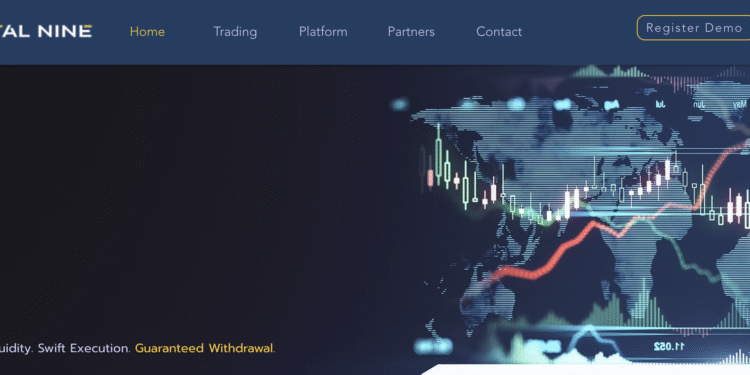
Capital Nine positions itself as an emerging multi-asset brokerage offering access to forex, stocks, commodities, indices, and crypto instruments. The website presents polished branding, promises of rapid execution, and customer support across jurisdictions. Yet a careful review of public data and user complaints reveals a serious cluster of warning signs that align strongly with patterns found in cryptocurrency fraud and in cases requiring crypto asset recovery.
The first major red flag is the lack of credible regulation. Capital Nine discloses registration as an International Business Company in Saint Lucia. However, this type of corporate registration is not equivalent to a valid financial license and does not provide active financial regulatory oversight. Independent broker directories categorize Capital Nine under status “SCAM,” asserting that it holds no oversight from any reputable financial authority. This regulatory void is a central concern because without formal oversight investors lack legal protection and recourse in case of misconduct.
The second red flag is overwhelmingly negative withdrawal and integrity complaints. On user review platforms such as Trustpilot a reviewer described Capital Nine as a “complete scam” asserting the firm refuses processing of withdrawals and withholds commissions. Such strong language from users who attempt to access their funds is a classic indicator that a platform may accept deposits but block exits. These patterns frequently trigger formal crypto scam investigation and subsequent recovery efforts by affected users.
The third red flag is limited operational history and fresh domain age. Sources indicate that Capital Nine began operations in 2023. New brokers with limited track records must be approached cautiously, especially when they also promote high leverage and multi-asset access without a well documented track record. Fresh domain registration combined with negative user reports suggests the possibility of a high turnover business model built around attracting deposits quickly before closures or rebrands.
The fourth red flag is opacity in fees, account terms, and documentation. Public reviews note that details on trading fees, withdrawal conditions, and minimum capital requirements are either unclear or absent from the website. Responsible brokers provide full transparency about spreads, commissions, withdrawal timelines, and refund policies. Without clear and binding disclosures, users risk being subject to hidden charges or shifting terms when they attempt to claim funds. This deliberate ambiguity is a recurring hallmark in many crypto scam cases.
The fifth red flag is ambiguous client fund safeguards and custody claims. Promotional content may mention negative balance protection or segregated accounts, but no independent proof of reserves or external audit documentation is published. Without verifiable custody safeguards, deposited funds may be co-mingled or misappropriated. Losses of client funds in absence of distinct safeguards often force victims to turn to forensic services and blockchain recovery experts to trace what remains.
The sixth red flag is limited independent reputation or endorsement. Capital Nine lacks consistent positive reviews from established trading communities or media coverage. Independent safety monitors and broker review lists place it under warnings or “avoid” categories. Reputable brokers accumulate coverage, audits, listening from institutional partners, and feedback. When a platform’s external reputation is weak or mostly negative, users must assume higher risk in advance of deposit.
The seventh red flag is the presence of structural complexity in payment routing. Available accounts show multiple contact addresses and overlapping offices, including locations in Dubai, and a registered office in Saint Lucia. When deposit paths and payment processors are structured across jurisdictions, tracing fund flows becomes more difficult. Criminal actors often use layered corporate and financial routing to hinder audit trails and complicate recovery efforts. Victims attempting crypto recovery must navigate multiple legal and geographic jurisdictions to locate funds.
When these seven red flags are viewed cumulatively, Capital Nine emerges as a high risk candidate. The absence of solid regulation, strong withdrawal complaints, fresh domain age, opaque financial terms, lack of custody transparency, weak external reputation, and complex operational routing together create a pattern seen in many fraudulent operations. Any investor interacting with this platform should consider funds at significant risk unless independently verifiable proof is provided.
Conclusion: What to Do If You’ve Dealt with Capital Nine
If you have already registered with Capital Nine or deposited funds, time and evidence preservation are essential. Here are actionable steps to protect yourself and begin recovery efforts.
First, gather and preserve all evidence. This includes screenshots of your account registration, deposit confirmations, transaction history, communications with support or account managers, promotional pages claiming performance or guarantees, and any displayed terms or disclaimers. If transactions involved cryptocurrency, record wallet addresses, transaction hashes, chain details, and timestamps. This documentation forms the foundation of any credible crypto scam investigation or recovery pursuit.
Second, stop adding any more funds. Any further deposits increase exposure and reduce the chance of successful recovery. Do not respond to requests for additional fees, taxes, or documents intended to unlock funds. Many operations use these demands to extract more capital while delaying withdrawal.
Third, request a withdrawal, even of a small amount, and document every step. Record confirmation messages, response times, additional requests, and any new fees. If the request is delayed, denied, or returns an error, retain all evidence and time stamps. These behaviors are a key symptom that funds may be withheld as part of a customer funnel.
Fourth, engage a blockchain recovery expert or forensic investigator. These professionals will trace where funds moved, identify intermediary accounts, detect mixing or laundering routes, and attempt to isolate exchanges or wallets used by the operator. Provide them with your full documentation and transaction data. The earlier their involvement, the better your chances before funds are further dispersed.
Fifth, submit formal complaints to financial regulators, your local consumer protection agencies, and cybercrime units. Provide a complete narrative, your evidence, transaction hashes, red flags you noted, and your loss amounts. Where Capital Nine claims registration in Saint Lucia, request verification from that jurisdiction’s authorities. Multiple coordinated complaints often increase official attention and may lead to freezing or investigation requests.
Sixth, collaborate with victim support groups and fraud recovery communities. Sharing non-sensitive operational intelligence such as payment processor names, domain registration patterns, or wallet clusters may help uncover linkages with other fraudulent brands. Community amplification often helps researchers map out infrastructure and achieve greater pressure on authorities or exchanges.
Be cautious of services promising guaranteed recovery in exchange for a large upfront fee. Many of these are secondary scams. Vet any service by asking for proof of past recoveries, transparent processes, written agreements, and success‐based fee models. Legit recovery firms are upfront about uncertainty; they do not guarantee full redemption before analysis.
Consider legal counsel experienced in cross border financial fraud. A lawyer can help issue formal legal notices, request mutual legal assistance, coordinate with authorities in relevant jurisdictions, and possibly lead group or class actions if multiple victims have been affected. Legal support is often crucial when pursuing funds across international boundaries.
Finally adopt rigorous future due diligence. Always verify licensing via recognized regulator registries. Require proof of audits, custody statements and third party attestations. Test withdrawal functionality with small sums before committing larger capital. Rely on feedback from credible independent sources and treat any platform with overly aggressive marketing and opaque terms as high risk.
While recovery from Capital Nine may be difficult, swift action, evidence collection, expert tracing, regulatory reporting and community coordination maximize your chance of mitigation. Exposing deceptive practices helps protect others and may lead to eventual accountability. Vigilance documentation speed and collaboration remain your best defenses in the fight against crypto scams.